Apples We Grow
Heritage and heirloom apples
We grow heirloom and cider apples that many people have never eaten — and once you do, you’ll never taste an apple the same way again! Not all trees bear the same, and many heirloom apples “take a break” and produce fewer apples every other year. We are committed to preserving and enjoying the diversity of heirloom apples for your family and ours. Want more info on how these taste? Head to Adam’s Apples for one blogger’s personal review of many, many varieties!
You can order our apples from our shop page (delivered in season) or as CSA shares. You can also find us at farmers’ markets in northeast Wisconsin in the late summer and fall. Check our Facebook page for our schedule. If you want to know when our apples are ready to go, you can also sign-up to our farm mailing list.
We’ve listed our apples here with the year they were cultivated (like Zestar!) or discovered (Harrison). They are roughly in harvest order.
August
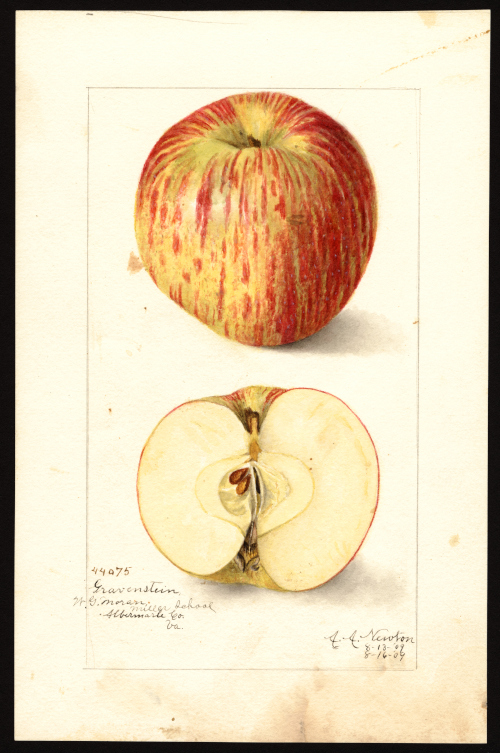
- Gravenstein (1669) The national apple of Denmark, this apple is tender, sweet, and tart. Cider Fresh Baking
- Zestar!/Minnewashta (1999) A juicy and crisp eating apple from Minnesota. Fresh
- Graniwinkle (1803) A cider apple sometimes mixed with Harrison. Very sweet. Cider Fresh
September
- St. Edmund’s Russet (1875) Vanilla-pudding with pear wrapped in an apple! A real dessert. Cider Fresh
- Cox’s Orange Pippin (1825) An orange-red apple that is one of England’s best dessert apples with a fine aroma and complex flavor something like vanilla, pear, and mango. (Best to eat after a few weeks in storage.) Baking
- Virginia / Hewe’s Crab (1700) A crabapple that was once the mainstay of American cider. Recommended by George Washington, and it tastes a bit like cinnamon. Cider
- Herefordshire Redstreak (1640) A cider apple first known under Charles I. Cider
- Kidd’s Orange Red (1924) A firm, sweet eating apple with a hint of violet. Fresh
- Winter Pearmain (1200) This apple stores “all winter,” and is a bit sweet with elements of pear. It was identified in 1849 in Indiana, but lore suggests that it is a medieval English apple. Fresh
- Karmijn de Sonneville (1971) Similar to Cox’s Orange Pippin but more aromatic. Fresh Baking
- Belle de Boskoop (1856) A crisp, lemony apple with high levels of sugar. From the Netherlands, this is a great baking (and pie!) apple. Baking
- Cortland (1915) A sweet apple that doesn’t brown when cut. Excellent in salads and lunchboxes. Fresh
- Margil (1750) One of our favorites! A small apple that feels like velvet. Slight honey flavor. FreshCider
October
- Reine des Pommes (1800) A traditional French cider apple that blends well with Dabinett. It is high in tannin. Cider
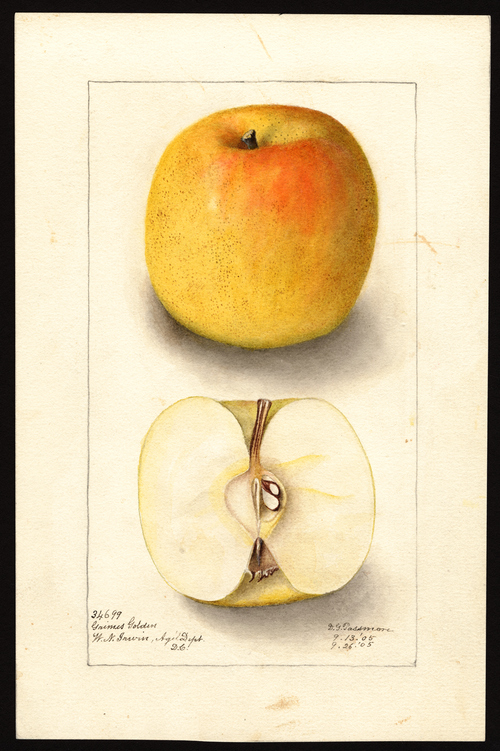
- Grimes Golden (1800). Almost certainly a parent of Golden Delicious, but with richer sweetness with occasional spiciness. Cider Fresh
- Macoun (1909) A northeastern favorite with floral hints wonderful for fresh eating (only!). Fresh
- Prairie Spy (1923) “Spies are for pies.” Stores well. Fresh Baking
- Wolf River (1856) Wisconsin’s own gigantic apple — excellent for sauce and baking. Baking
- Bramley’s Seedling (1809) A juicy, somewhat tangy British fruit with a strong apple flavor. “Melts” when cooked. Baking Cider
- Wickson Crab (1944) An intense crabapple extremely high in pectin that is a wonderful for jam and jelly. High in both sugar and acid. Fresh Cider
- Opalescent (1890) Iridescent! Medium to large, crunchy with a hint of strawberry and lilac. Excellent fresh, but cooks and juices well. Fresh
- Baldwin (1740) A crisp eating and cider apple that keeps its shape when baked. Keeps well. Cider Fresh Baking
- Roxbury Russet (1649) This apple sweetens with time, and it is always an excellent baker and cider apple. Cider Baking
November
- Hudson’s Golden Gem (1931) This apple tastes like a pear — and it was once sold as one. Sweet and crunchy. Cider Fresh
- Harrison (1720) A prolific, almost perfect cider apple for a single-variety cider. Good flavor for eating after several weeks in storage. Cider
- Calville Blanc (1600) This French apple with a distinct shape has the highest vitamin C content of any apple! Tastes a bit like pineapple or pear. Cider Baking
- Golden Russet (1700) An apple with honey-nut flavor that makes good eating and baking, but is excellent in cider. Cider Fresh Baking
- Arkansas Black (1870) An apple with a deep-purple skin and very hard. A favorite in cider. Cider
- Blue Pearmain (1833) A favorite of Henry David Thoreau, this apple has bluish hues. Dry and crisp flavor that is excellent for baking — though not bad to eat (especially if peeled). Fresh Baking
- King David (1893) A strongly-flavored apple with hints of spice and citrus. Best for pie, sauce, and cider. Cider Baking
- Newtown Pippin (1720) Queen Victoria was partial to this sweet-tart apple. Smells a bit like pine. Cider Fresh Baking
- Bedan des Partes (1869) A traditional French bitter-sweet apple for cider blends. Cider
- Court Pendu Plat (1613) An ancient apple, possibly dating to Roman times, that is a a bit dry and citrus-like. Fresh Baking
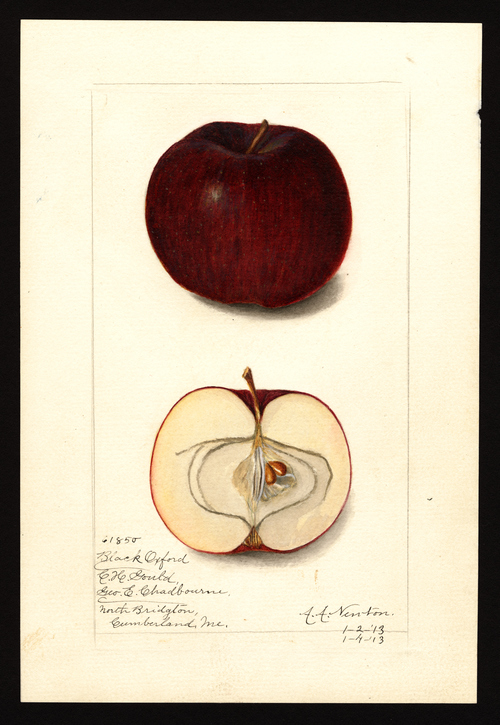
- Black Oxford (1790) A long-lived, blue-to-black apple from Maine with a balanced flavor. Cider Fresh Baking
Cider apples
If you’re interested in making your own cider, we’ve listed those varieties here. You can eat any apple, but these apples have taste profiles that make them especially good when pressed and made into cider.
Early Cider
- Gravenstein (1669) The national apple of Denmark, this apple is tender, sweet, and tart. Cider Fresh Baking
- Graniwinkle (1803) A cider apple sometimes mixed with Harrison. Very sweet. Cider Fresh
- St. Edmund’s Russet (1875) Vanilla-pudding with pear wrapped in an apple! A real dessert. Cider Fresh
- Virginia / Hewe’s Crab (1700) A crabapple that was once the mainstay of American cider. Recommended by George Washington, and it tastes a bit like cinnamon. Cider
- Herefordshire Redstreak (1640) A cider apple first known under Charles I. Cider
- Margil (1750) One of our favorites! A small apple that feels like velvet. Slight honey flavor. FreshCider
- Reine des Pommes (1800) A traditional French cider apple that blends well with Dabinett. It is high in tannin. Cider
- Grimes Golden (1800). Almost certainly a parent of Golden Delicious, but with richer sweetness with occasional spiciness. Cider Fresh
- Bramley’s Seedling (1809) A juicy, somewhat tangy British fruit with a strong apple flavor. “Melts” when cooked. Baking Cider
Late Cider
- Wickson Crab (1944) An intense crabapple extremely high in pectin that is a wonderful for jam and jelly. High in both sugar and acid. Fresh Cider
- Baldwin (1740) A crisp eating and cider apple that keeps its shape when baked. Keeps well. Cider Fresh Baking
- Roxbury Russet (1649) This apple sweetens with time, and it is always an excellent baker and cider apple. Cider Baking
- Hudson’s Golden Gem (1931) This apple tastes like a pear — and it was once sold as one. Sweet and crunchy. Cider Fresh
- Harrison (1720) A prolific, almost perfect cider apple for a single-variety cider. Good flavor for eating after several weeks in storage. Cider
- Calville Blanc (1600) This French apple with a distinct shape has the highest vitamin C content of any apple! Tastes a bit like pineapple or pear. Cider Baking
- Golden Russet (1700) An apple with honey-nut flavor that makes good eating and baking, but is excellent in cider. Cider Fresh Baking
- Arkansas Black (1870) An apple with a deep-purple skin and very hard. A favorite in cider. Cider
- King David (1893) A strongly-flavored apple with hints of spice and citrus. Best for pie, sauce, and cider. Cider Baking
- Newtown Pippin (1720) Queen Victoria was partial to this sweet-tart apple. Smells a bit like pine. Cider Fresh Baking
- Bedan des Partes (1869) A traditional French bitter-sweet apple for cider blends. Cider
- Black Oxford (1790) A long-lived, blue-to-black apple from Maine with a balanced flavor. Cider Fresh Baking
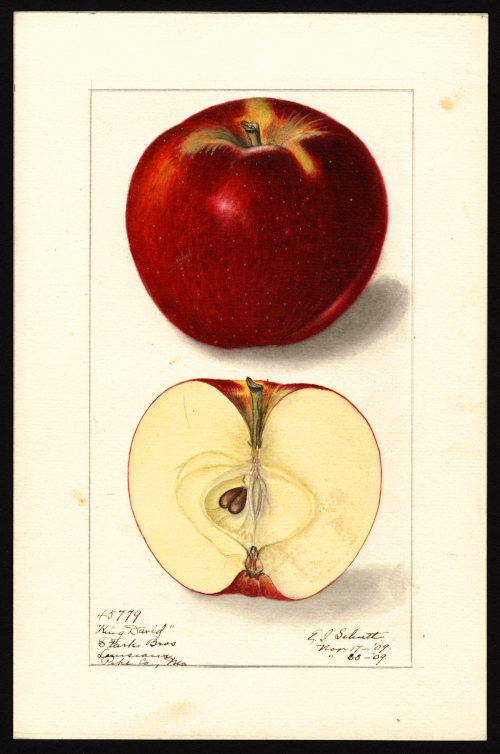
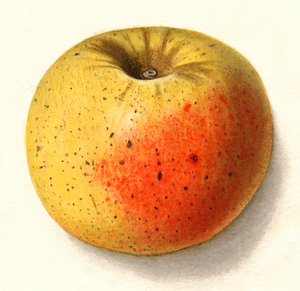
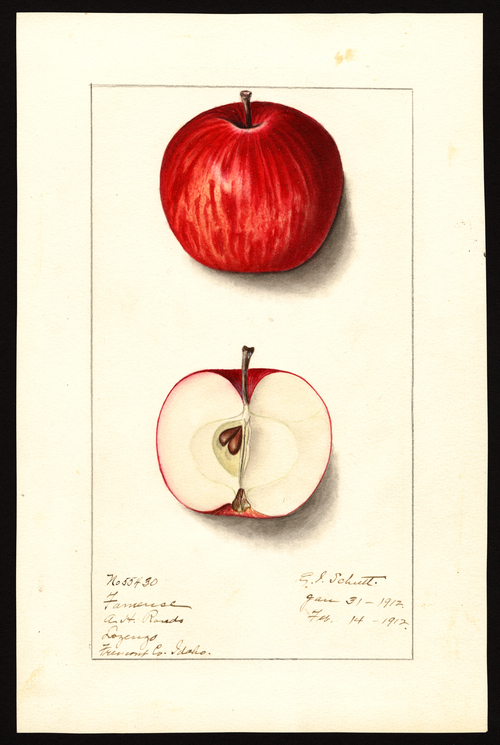
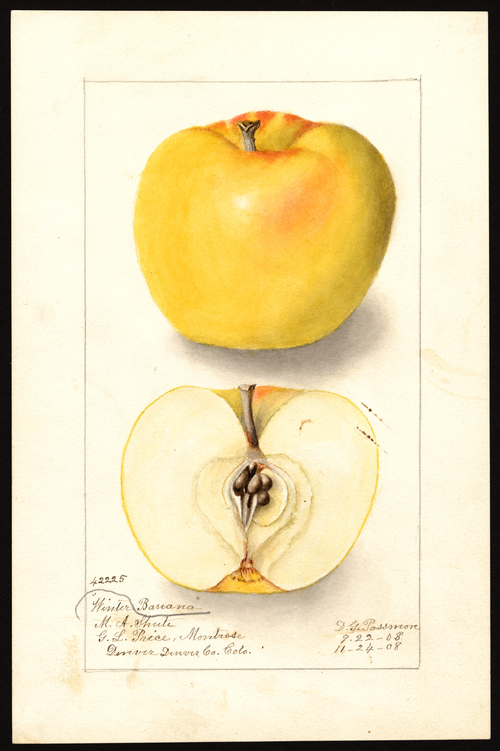
Apple watercolors from the U.S. Department of Agriculture, Pomological Watercolor Collection, Rare and Special Collections, National Agricultural Library, Beltsville, MD 20705.